
Standing on the first tee, looking at the wide yet trap-filled fairway ahead, what is your sensation?
Is it a burning desire for conquest or a subtle, undetectable hesitation?
A tee shot is not just the beginning of a round; it is the foundation of psychological advantage and tactical layout.
While a reliable driver brings confidence, what truly establishes an advantage from the tee is a coordinated long-range weapons system.
Do you rely excessively on a single golf club, only to feel powerless when facing different distances and fairway shapes?
Today, we stop discussing a single wood in isolation and instead deconstruct how to build your tee and fairway attack system, allowing you to seize the initiative from the very first stroke.
The Limitation of a Single Wood: When Your Arsenal Only Has a Hammer
Many golfers spend a fortune searching for a “magical” driver, expecting it to solve all tee shot problems.
This is akin to a warrior bringing only a sword to the battlefield—sharp, yes, but struggling when facing long-distance targets or complex terrain.
The pain points of a single-wood strategy are obvious:
- Rigidity in Distance Selection: Using a driver with full force on both a 480-yard par-4 and a 380-yard par-4? The former might leave an awkward distance, while the latter could send the ball past the fairway into a hazard.
- Lack of Trajectory Control: Against a headwind or when needing a low-flight path to bypass trees, the high launch angle of a driver can become a disadvantage.
- Dearth of Safety Options: On narrow doglegs or holes lined with OB stakes, you need a controllable golf club that guarantees the fairway, not a gamble for maximum distance.
Real strategy begins with the realization: different battlefields require different weapons.
A set of woods and hybrids with varying angles and functions is the “long-range precision guidance system” in your bag.
Building Your Four-Tier Long-Range Attack Echelon

An efficient long-range attack system is typically composed of four tiers, each with its own responsibilities, connecting seamlessly.
Tier 1: The Driver—The Distance Core
Its mission is clear: to pursue the maximum legal distance on wide, safe fairways.
The core of modern driver technology is “distance optimization under forgiveness.”
Through lightweight carbon fiber shafts to reduce swing load and increase head speed, combined with precision aluminum alloy heads for stable energy transfer.
Adjustable hosel technology (e.g., 8.5°–12.0°) allows you to fine-tune the trajectory to suit course conditions or your current form.
It is your strategic deterrent power, used where it is needed most.
Tier 2: 3-Wood—The Tactical Master
This is one of the most versatile long-range golf clubs.
A shorter shaft and larger loft than a driver provide better control and a higher trajectory.
Its missions are
- Attacking the green or getting as close as possible on the second shot of a par-5.
- Serving as a safer tee shot option on narrow par-4s to ensure fairway hit rates.
- Rescuing balls from the long grass, as its head design is better suited to move through turf than a driver.
Tier 3: 5-Wood & Hybrids—The Precision Sharpshooters
When the distance is slightly shorter but requirements for precision and trajectory are higher, these come into play.
A 5-wood produces a higher, softer arc than a long iron, landing more stably—a lethal tool for attacking greens.
The Hybrid is a revolutionary product in this range, blending the ease of a wood with the control of an iron.
Its low-deep center of gravity makes the ball launch easily, even from poor lies.
For most amateurs, replacing difficult long irons with a hybrid is the quickest way to improve long-range stability.
Tier 4: High-Loft Hybrids or Iron-Woods—The Connecting Bridge
This golf club fills the final distance gap between your longest iron and your 5-wood/hybrid, ensuring there is no “dead zone” in your attack range.
It is the final piece of the puzzle for precise mid-to-long-range attacks on the fairway.
The Secret of Synergy: Consistency is Key
The key to assembling this “special forces unit” is not about collecting the most famous brands but about synergy.
If the shaft stiffness, weight, swing weight, and even grip size of each golf club are drastically different, you will need constant adjustments during switching, which disrupts muscle memory and rhythm.
A systematically designed wood set pursues this consistency.
For example, the shafts may use similar carbon fiber materials and regular (R) flex to ensure the swing feel remains continuous from driver to hybrid.
The head technology follows a single philosophy, focusing on optimizing distance based on forgiveness.
This seamless transition experience allows you to choose the most suitable weapon quickly and confidently based on the real-time situation, rather than wasting energy on hesitation and adaptation.
From Theory to Practicality: How Should You Configure Your Bag?
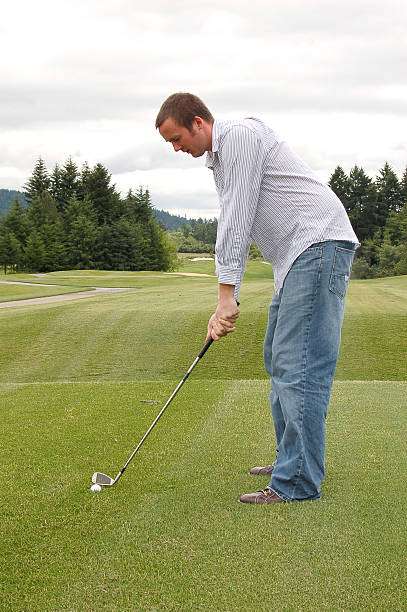
For most amateur golfers, a powerful and practical long-range configuration could be
golf Club Type |
Primary Role |
Advantage |
|---|---|---|
|
Driver |
Maximum Distance |
Strategic Deterrence |
|
3-Wood |
Tactical Versatility |
Balance of Distance/Control |
|
5-Wood |
Green Attack |
Soft Landing/High Trajectory |
|
4-Hybrid |
Bridge & Rescue |
High Forgiveness/Easy Launch |
This combination covers the complete range from maximum tee distance to roughly 200-yard green attacks.
It abandons hard-to-handle 2-4 long irons in favor of easier-to-hit woods and hybrids, significantly increasing the success rate in actual play.
Frequently Asked Questions (FAQ)
Q: Which one should I buy first? How should I upgrade step-by-step if my budget is limited?
A: The priority should be Driver > Hybrid > 3-Wood > 5-Wood.
The driver is used most frequently; the hybrid immediately solves the pain of long shots; and the 3-wood and 5-wood further enrich your tactics.
Ensure the shaft feel is coordinated with your existing golf clubs during upgrades.
Q: Do female and senior golfers also need this many woods?
A: They need them more.
Because of relatively slower swing speeds, they rely more on technology (lighter shafts, higher forgiveness) to compensate for distance and stability.
A configuration with high-loft fairway woods and multiple hybrids allows them to enjoy strategic offense on shorter fairways rather than struggling with unmanageable irons.
Q: How should I practice to fully utilize this “arsenal”?
A: The key practice is “Distance Calibration.”
Go to the range and hit 10-20 balls with each wood/hybrid, recording your average distance (not the maximum) with a rangefinder.
Knowing the stable distance of your driver, 3-wood, 5-wood, and hybrid allows you to choose decisively on the course instead of blindly reaching for the “biggest” golf club.
Golf is a strategic game that begins at the tee.
Your tee and fairway attack system determines whether you can create one comfortable next shot after another.
Investing in a coordinated, reliable set of woods and hybrids is not a simple purchase; it is a strategic upgrade to your overall competitive level.
It means more fairways, shorter second shots, more Greens in Regulation (GIR), and consequently, lower scores.
When you can calmly pull the most suitable “weapon” for the current situation from your bag and execute the shot with confidence, that sense of control will become the most powerful force in defeating the course—and more importantly, defeating your own internal hesitation.
Start by optimizing your long-range equipment and redefining your opening game.