Is This “Master Key” Hiding in Your Bag? Unveiling the Hybrid Revolution

Is there a single golf club that can free you from the fear of long irons while bridging the gap left by fairway woods?
Is there a tool that delivers a reliable strike from the fairway, the rough, or even the most awkward lies?
If you struggle with approach shots from 180-220 yards or feel helpless facing narrow green entrances, you might be overlooking a revolutionary product of modern golf design: the hybrid.
It looks like a small wood but carries the precise mission of an iron. Often called a “rescue” or “utility” golf club, its role goes far beyond simple recovery.
Today, we dive deep into this “secret weapon”—underestimated by many amateurs, yet a staple in the bags of nearly every professional player.
The Hybrid: Where It Came From and What It Solves
The birth of the hybrid stems from a universal pain point: traditional long irons (especially 2, 3, and 4 irons) are notoriously difficult to hit.
These golf clubs feature small lofts, long shafts, and high centers of gravity, requiring extreme clubhead speed and precise impact angles to achieve the desired distance and trajectory.
For most amateurs, hitting a high, stable shot with a long iron is nothing short of a gamble.
The hybrid’s design philosophy uses “wood logic” to solve “iron problems” through two immediate benefits:
- Higher Forgiveness: Larger head volume and a rearward center of gravity significantly expand the sweet spot. Even on off-center hits, you maintain respectable ball speed and distance, avoiding the disastrous “duffs” or “thin” shots common with long irons.
- Easier Launch: The low, deep center of gravity acts like a launchpad, propping the ball up. This creates an ideal launch angle even with an imperfect swing, producing a penetrating yet soft-landing arc that boosts Green in Regulation (GIR) rates.
More Than a Replacement: 3 Real-World Scenarios
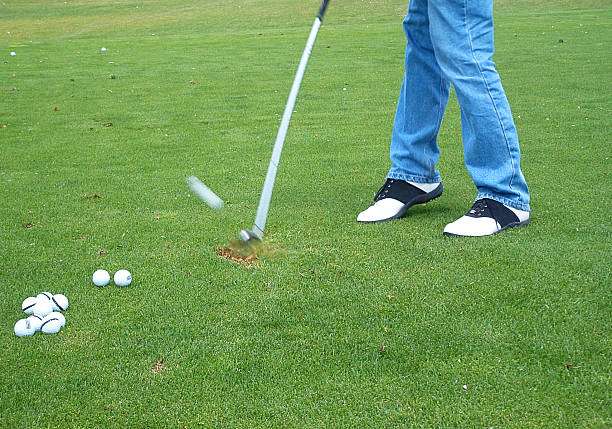
While many see hybrids solely as long iron replacements, their utility is far more expansive.
Scenario 1: The Fairway “Confidence Booster”
Faced with a 200-yard approach shot? The hybrid offers more directional control than a fairway wood and more stability than a long iron. Its built-in forgiveness acts as a safety net for your strategy.
Scenario 2: The Rough “Specialist”
Is your ball buried in thick grass? Irons often get snagged, while woods risk thinning the ball. The rounded sole of a hybrid is designed to glide through turf and “slice” through grass blades for a clean strike.
Scenario 3: The Tee Box “Navigator”
On short or narrow par 3s and par 4s, a hybrid is often the smarter choice for a steady tee shot. It ensures a high fairway-hit percentage, which is a proven strategy for lowering your score.
Explore the latest high-performance hybrid collections to transform your long game
How to Choose Your First Hybrid

If you’re ready to add one to your bag, focus on these three critical factors:
|
Feature |
Guideline |
Purpose |
|---|---|---|
|
Loft Selection |
19-21° replaces 3/4 iron; 22-24° replaces 4/5 iron |
Fills the “distance gap” |
|
Shaft Type |
Lightweight Graphite (R Flex recommended) |
Increases swing speed/reduces fatigue |
|
Aesthetics |
Clear alignment lines and comfortable head size |
Builds visual confidence at address |
A well-designed hybrid utilizes a precision alloy head for energy transfer and offers both left- and right-handed versions to ensure a smooth transition from woods to irons.
Building Your Long-Range Arsenal
Advanced players often carry a combo setup: a lower-lofted hybrid (19°) to replace a 5-wood for long fairway attacks and a higher-lofted version (24°) to replace a mid-iron for precision green attacks. This creates a forgiving weaponry that allows you to swing with full confidence regardless of the lie.
Frequently Asked Questions (FAQ)
Q: Should I buy a hybrid or a fairway wood first?
A: For most beginners and intermediates, the utility and frequency of a hybrid make it the priority. If you need maximum distance on wide par 5s, choose a wood; for everything else, choose a hybrid.
Q: Can I replace all my long irons with hybrids?
A: Absolutely. This is the modern trend. Even pros often swap out their 3 and 4 irons for multiple hybrids based on confidence and actual results rather than tradition.
Q: Do fast-swinging players need hybrids?
A: Yes. For high-level players, the value lies in versatility. In heavy wind or poor lies, a hybrid provides a stable output and unique trajectory that irons simply cannot match.
Ultimately, golf is a game of confidence and choices. The hybrid is not just a golf club; it’s a shift in mindset. Instead of struggling with ill-suited equipment, let technology pave the way.
It’s time to re-examine the distance gaps in your bag. The key to breaking through your plateau might just be the hybrid you haven’t tried yet.
Give it a chance, and it may reward you with a newfound composure and self-assurance across the entire course.