Expensive Isn’t Always Better: 3 Common Myths About Golf Clubs Value

Walk into any golf specialty store and you will immediately feel an unspoken pressure. One wall displays the latest shiny golf clubs, priced high enough to pay for a nice vacation; the other features models that look a bit more “ordinary.” Your friend has just shown off his newly purchased $600 driver, while you hesitate and ask yourself:
Do I really need to spend that much money to play better golf?
We live in an era where value is easily defined by price tags. But in a complex sport like golf, equating “expensive” with “right” may be the most costly misunderstanding on your equipment-upgrade journey.
The true value of a club does not lie in how many obscure patented terms it uses, or which tour star endorses it, but in a much more fundamental question:
To what extent does it solve your specific problems?
Today, let us put aside blind worship of price and break down three common myths about golf club value. You may discover that smart investment is often about insight, not merely about budget.
Myth One: Only the Newest and Flashiest Technology Matters

Every year, major brands launch “revolutionary” new products, promoting their “disruptive” technologies. Aerodynamic clubheads, AI-designed faces, unprecedented material composites all sound exciting.
But here is a cold reality: for the vast majority of amateur golfers, the marginal benefits of these cutting-edge technologies are diminishing rapidly.
The development curve of golf club technology is not linear. Over the past twenty years, within the limits of the rules, core performance improvements such as forgiveness and distance have largely reached a plateau.
This year’s “breakthrough” may simply be a 1% increase in ball speed or a minor center-of-gravity adjustment compared to last year. That 1% is critical for professional players who rely on every possible advantage, but for weekend golfers, it is easily overshadowed by what you had for breakfast or how well you slept the night before.
What often provides more value are mature, time-tested core club technologies that have been validated by years of market use.
For example, a well-designed low center-of-gravity, deep cavity-back iron head delivers highly noticeable improvements in forgiveness and ease of launch. An effective face-flex technology, such as certain clubs’ “speed slots,” can genuinely preserve ball speed on off-center hits.
The risk of chasing the latest technology is paying a high premium for “potential” you may never truly access, while overlooking more basic, economical golf club designs that can immediately and significantly improve your game.
Value lies in efficiency at solving real problems, not in the length of a technology checklist.
Myth Two: “Tour Model” Automatically Means High Performance
This is the most tempting and also the most dangerous myth. We watch tour professionals on television hitting breathtaking controlled shots with blade irons and precisely launching compact pear-shaped fairway woods onto greens.
Then we conclude: if they play well with these clubs, they must be the best, and I should use them too.
But we must understand that professional golfers’ equipment needs are fundamentally opposite to those of amateurs. Professionals demand extreme feedback, workability, and consistency. Their swing repeatability is extraordinarily high, and they strike the sweet spot almost every time.
Therefore, they can choose “player’s clubs” with very low forgiveness but exceptionally clear feedback. These clubs are like surgical scalpels: unstoppable in the hands of masters, but in the hands of ordinary players, even a small mistake can cause serious damage.
Amateur golfers, by contrast, need forgiveness, playability, and confidence.
- We need acceptable results even when impact is off-center.
- We need clubhead designs that help launch the ball more easily.
- We need to stand over the ball feeling the club is our ally, not a harsh critic.
Choosing clubs designed for “game improvement” does not mean you lack skill. It means you are smart enough to use tools to buffer performance fluctuations and protect your score and enjoyment.
A club that keeps you in the fairway on mishits and offers escape from the rough delivers performance in the real world: lower scores and a more enjoyable experience.
That performance far outweighs a “tour model” that looks cool on the range but causes disasters on the course. A truly high-performance golf club is the one that helps you perform consistently where it actually matters.
Myth Three: There Is No “All-Purpose” Club, but “Multi-Functional” Clubs Are Treasures

We often fantasize about finding a perfect golf club that can drive 300 yards, escape bunkers, and spin delicate chips around the green. Such an “all-purpose” club does not exist, and neither the rules nor physics allow it.
However, there is a category of clubs designed specifically to solve multiple common problems, delivering remarkable situational value. The most representative example is the hybrid. If you are still debating whether it deserves a place in your bag, you may be missing one of the most valuable equipment revolutions in modern golf.
Consider these frustrating scenarios:
- A 200-yard par-3 where long irons feel intimidating.
- The second shot on a par-5 where a fairway wood is too short and a long iron too risky.
- A ball sitting in light rough or an uneven lie where you just need to “hack it out.”
All these situations share a common trait: they fall into the awkward zone where traditional irons are difficult and fairway woods are too dangerous.
A well-designed hybrid is created precisely to fill this value gap. It typically features a larger head and lower center of gravity than long irons, often using aluminum alloy materials to optimize impact feel. This allows the ball to be swept easily from turf or even light rough, producing high-launching shots with soft landings.
Its loft range usually covers traditional 3-iron to 5-iron territory, yet with far greater playability. More importantly, its multi-functionality means that with the price of one club and one slot in your bag, you solve multiple situations that might otherwise require two different clubs and extensive practice.
This “one club, many solutions” quality translates directly into higher usage frequency and lower decision pressure.
When you stand over a difficult lie knowing you have a reliable “savior” in your bag, that confidence alone is priceless. This is why hybrids have gradually replaced hard-to-hit long irons for many players, becoming an indispensable value core in the bag. They may not be the most expensive clubs, but they are often among the highest-return investments.
Frequently Asked Questions (FAQ)
Q: How should I set a reasonable club budget and spend money wisely?
A: Forget the idea of a “total budget” and think instead in terms of a “pain-point budget.” Calmly analyze your last five rounds. Where did you lose the most strokes? Off the tee? On approach shots? Or on the greens?
Prioritize investment in your number one pain point. If putting is a nightmare, investing in a confidence-building putter will have a greater immediate impact than upgrading your driver. If long irons are a black hole, an easy-to-hit hybrid is the most efficient investment.
Focus limited funds on the one or two key golf clubs that most improve your game’s weakest link.
Q: Are used golf clubs worth considering as a high-value option?
A: Absolutely, especially for players seeking value or experimenting with different setups. Club technology does not leap forward every year.
Previous-generation mid-to-high-end models often offer nearly identical core performance in forgiveness and distance compared to the latest releases, at half or even one-third of the price.
When buying used clubs, check face wear, shaft condition, and grip quality. Finding a well-maintained, properly fitted former flagship model can be an exceptional deal, delivering near-top-tier performance at an entry-level price.
Conclusion: Bringing Value Back to the Essence of “Problem Solving”
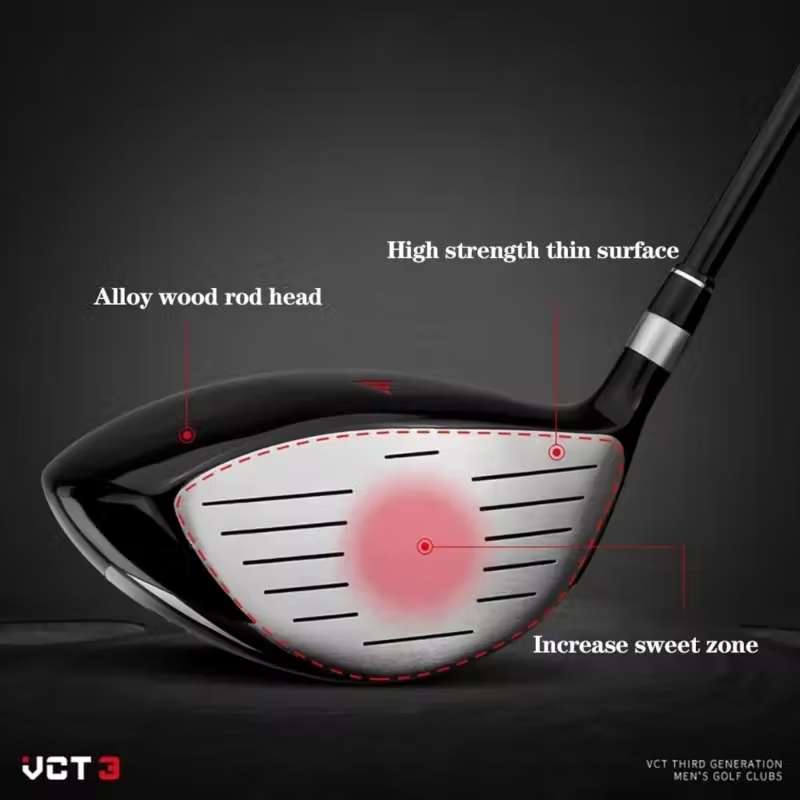
It is time to redefine our internal value system for golf clubs. It should not be hijacked by flashy marketing language or jaw-dropping price tags.
True value is simple and powerful: can this club rescue you from your most common frustrations? Can it make you more confident on the course? Can it more consistently convert your hard-earned swing into good results?
So next time you consider upgrading equipment, conduct an internal “value audit.” Ask yourself:
What is my biggest pain point? Do I need a forgiving partner that tolerates mistakes, or a strict instructor that demands perfection? Which club will be used most often and deliver the highest return on use?
Remember, the most expensive golf club is not necessarily the most suitable one. The club that truly fits you often becomes the most valuable and indispensable asset in your bag precisely because it solves your real problems.
Invest in solutions, not labels. That is the real par in the golf equipment game.