Find Your Rhythm: How a Golf Club That Feels Right Transforms Your Swing

In the simulator room, numbers flash across the screen: ball speed, launch angle, spin rate, and carry distance. We focus on these metrics as if they are the sole key to unlocking golf’s mysteries. We spend hundreds of dollars on “shaft fitting,” searching for the theoretically perfect combination.
Yet when you stand on the first tee, the breeze brushing past and your heartbeat quickening slightly, those cold numbers often fade into the background. What governs your thoughts in that moment is something more primal, more instinctive: feeling.
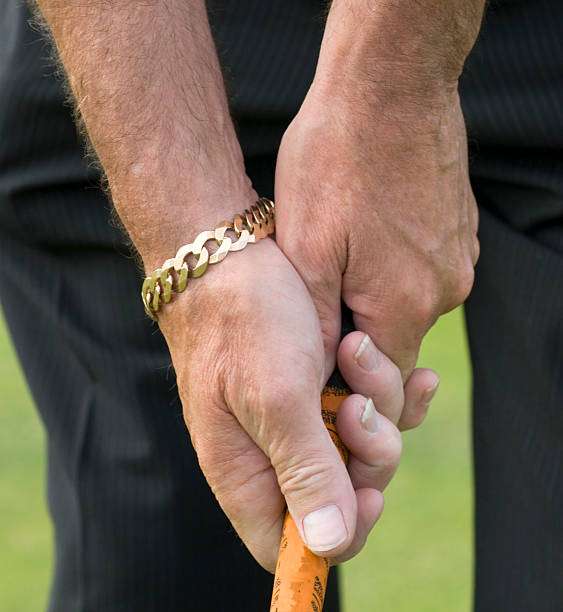
This “feel” is difficult to quantify but undeniably real. It is the smooth guidance from weight distribution during the backswing, the clear feedback from the shaft’s flex in the downswing, the reassuring solid vibration through the grip at impact, and the effortless balance of your body after the follow-through.
When a golf club perfectly aligns with your swing rhythm and proprioception, it creates a marvelous state of “man and club in harmony.” In this state, technical thought gives way to fluid execution—you are not “manipulating” a tool but dancing with a perfectly attuned partner.
Today, we temporarily set aside launch monitors and swing analyzers to explore this often data-obscured but vital dimension of enjoyment and lasting confidence: how to find the golf club that resonates with your swing rhythm.
Where Does “Feel” Come From? A Dynamic Sensory Symphony

A golf club’s “feel” is not mystical. It is a dynamic sensory experience composed of multiple physical feedbacks, a continuous dialogue between your body and the equipment throughout the swing. We can break it into key movements:
Movement One: Balance and Lift
From the moment you grip the golf club, how does its static weight distribute in your hands? When lifted lightly off the ground, does the balance make the clubhead feel naturally present without dragging? An ideal swing weight allows clear awareness of the golf clubhead’s position without disrupting backswing flow.
Movement Two: Backswing Guidance and Load
As you rotate, how does the golf club’s weight move? A well-feeling club naturally guides a balanced, wide backswing. You sense the shaft’s flex gently loading energy rather than battling a stiff stick or a heavy head spinning out of control.
Movement Three: Downswing Transition and Release
The core of feel. From the top, does the shaft’s rebound sync with your force sequence? Does it help initiate the downswing or lag behind? The perfect “whip sensation” arises when shaft flex and body rotation match harmoniously.
Movement Four: Impact Feedback
The moment of contact transmits the most direct information. Is it a crisp “crack” with a clean, slight vibration, or a dull “thud” with unpleasant buzzing? Ideal feedback is clear, solid, and non-jarring, informing shot quality without over-penalizing your senses.
Finale: Follow-Through Smoothness
A good swing ends balanced and relaxed. If the golf club’s balance or weight is unsuitable, you may feel off-kilter or need extra effort to stabilize the finish.
Together, these movements form the club’s overall “feel.” It relates to trust, predictability, and whether each swing becomes a pleasurable, confidence-building experience.
The Lightweight Revolution: Redefining Swing Feel
Historically, heavy steel shafts were standard. They offered a strong, stable feel but required more strength and active control—swinging felt like “pushing” a heavy object. Modern lightweight carbon fiber shafts have transformed this “feel” game.
The primary goal of lightweight design is not simply making the golf club “light.” Its philosophy is to remove unnecessary burden, making swings more efficient and rhythm-driven rather than strength-driven. With a well-designed lightweight club, the most obvious obstacles to feel disappear—you no longer fight the basic weight.
This creates a dual liberation:
- Sensory Liberation: Reduced shaft weight allows better perception of clubhead motion and speed. Control changes from “vague” to “precise,” sensing centrifugal forces naturally pulling the head outward for a smoother release.
- Rhythm Liberation: Heavy golf clubs force over-reliance on arms and the upper body to start the downswing, disrupting core-led rhythm. Lightweight clubs allow and encourage a fuller rotation and smoother acceleration, letting your swing feel like “flowing” rather than “straining.”
For example, a driver with a lightweight carbon fiber shaft lets you create clubhead speed freely while intelligently redistributing saved weight around the head to optimize center of gravity and forgiveness. The resulting effortless power delivers a light swing with more solid, satisfying feedback at impact. This transition from “heavy push” to “light whip” is crucial for building a smooth, repeatable swing rhythm.
More Than Light: Harmony of Materials and Design
“Feel” is not dictated by the shaft alone. Clubhead composition and design orchestrate the feedback symphony at impact.
Take a wood. Clubhead material strongly affects sound and tactile feedback. Precision aluminum alloy is classic and widely used. Compared to harder materials, it provides solid, focused, slightly crisp feedback. This is not a harsh “wall hit” but an efficiently transmitted, slightly elastic “pop,” telling you shot quality clearly and satisfyingly.
Head design—center of gravity, internal structure—further shapes feel. A low, rearward CG helps launch the ball and creates a stable, forgiving sensation, amplifying the sweet spot. Slightly off-center hits still feel controlled, maintaining confidence.
Finally, shaft flex connects the system. An R (regular) flex is popular because it balances stability and responsiveness for most medium swing speeds. It is stiff enough to maintain control but flexible enough to load and release energy effectively, providing a pleasing “catapult” sensation. It functions like a bridge: solid yet elastic, transmitting power efficiently with rhythm.
Testing and Trusting Your “Feel”

Given its importance, how do you test it when selecting a golf club? Consider these methods:
- Blind Swing Test: Safely hold a candidate club, close your eyes, and take slow, full swings. Focus purely on balance. Does it naturally hang in your hand? Is weight evenly distributed? Which feels most natural and effortless? Your body is the most honest judge.
- 70% Power Shots: Hit a few balls at ~70% effort on a simulator or mat. Don’t focus on distance—focus on smoothness, clear impact feedback, and a balanced finish. A good-feeling golf club provides predictable, satisfying feedback even at submax effort.
- Swing Desire Index: Ask yourself: does this club make me want to swing confidently? Or does it make me tense? The best golf club feels like a supportive friend, inspiring optimal action rather than a strict examiner inducing fear.
Frequently Asked Questions (FAQ)
Q: Should I rely entirely on feel, ignoring data?
A: Never go to extremes. Feel and data complement each other. Data (ball speed, launch angle, and spin) reports objective results. Feel conveys subjective experience. Ideally, a great swing feel (smooth, solid) produces excellent data (long, straight). Good data with poor feel may prevent trust under pressure. Good feel with poor data might indicate swing flaws or deceptive sensation. Professional fitting aims to harmonize feel and data.
Q: As a beginner, how do I develop judgment of “golf club feel”?
A: The best method is broad exposure. Even without immediate purchase plans, try golf clubs of varying weight, balance, and head size at large retail stores. From heavy to light, blade to oversized cavity back, feel them all. Your body will reveal which clubs swing naturally. Borrow golf clubs from friends of different body types and skill levels for trial swings. Each experience enriches your “feel database,” helping you intuitively discern your preferred feedback and balance.
Conclusion: Find Your Rhythm Partner

Selecting a golf club is ultimately a journey to find a “rhythm partner.” Specifications and technology offer a rational filter, but the decisive moment comes from a visceral confirmation: it’s the one.
Does its lightweight design allow swings as natural as breathing? Does its balance instill confidence in every takeaway? Does its impact feedback communicate honesty and encouragement? When all these align into a resonant, positive experience, you’ve found it.
After analyzing all charts and data, take a quiet moment. Grip the candidate club, take a deep breath, and swing. Listen to your body, and trust that primal, joyful intuition. In golf’s long game, the best equipment is always the one that makes you smile each time you reach into your bag, feeling everything is possible. Find it, and your rhythm will never be the same.