Swing Weight: The “Invisible Coach” Controlling Your Rhythm

Have you ever felt this way? You take a golf club from your bag, make a few practice swings, and even before hitting the ball, something feels off.
Maybe the backswing feels sluggish, requiring extra effort; maybe the golf clubhead seems to “run ahead” on the downswing, uncontrollable; or perhaps you just can’t locate the clubhead in the air, making your swing rushed and chaotic.
You check your posture and adjust your grip, yet the problem persists. You begin to doubt your technique and lose confidence. But could it be that the issue isn’t entirely on you? Could there be an invisible “coach” silently influencing and even directing your swing rhythm—one you’ve never truly recognized?
This invisible coach is swing weight. Often misunderstood or overlooked by amateur golfers, it profoundly affects swing feel and consistency. Today, let’s uncover this hidden master controlling your rhythm.
What Is Swing Weight? A See-Saw Analogy
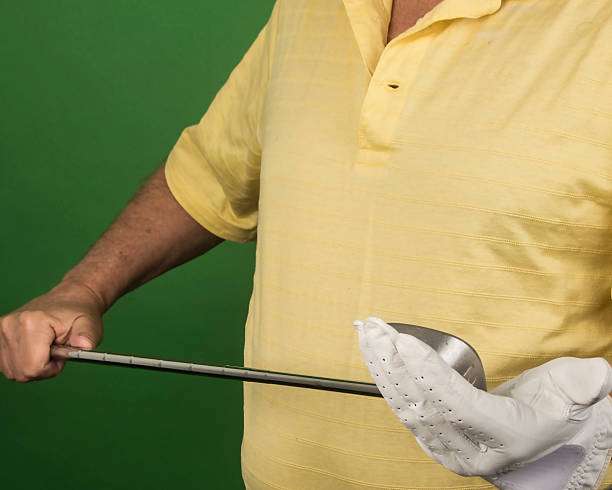
First, let’s clarify a common misconception: swing weight is not total golf club weight.
You can pick up two golf clubs with identical total weight, yet they feel completely different. One may feel heavy at the head, like swinging a hammer; the other may feel balanced, with a light head. This difference is swing weight in action.
Think of a simple seesaw. Its total weight is fixed, but placing different weights at the ends shifts the balance point and changes the force needed to lift it. Swing weight measures the relative “heaviness” of the clubhead compared to the grip during the swing.
Professionals denote swing weight with a letter-number system such as C9, D0, D2, D4, etc. The scale roughly runs A (lightest, rare) < B < C < D < E (heaviest), with numbers for finer gradations. For standard-length golf clubs for adult men, swing weights usually range from C9 to D4.
Understanding this is the first step: when you say a golf club “feels head-heavy” or “too light,” you’re actually describing swing weight, not total weight.
How Swing Weight Secretly Directs Your Rhythm
Swing weight directly influences muscle perception and movement patterns, subtly directing your swing rhythm.
Too heavy (e.g., D5+)
Your body instinctively senses a heavy clubhead that must be “dragged,” leading to:
- Sluggish backswing: Requires extra effort, is often hand-dominated, and breaks connection with the body.
- Strained downswing: More effort is needed to change the heavy clubhead’s direction, leading to early hand acceleration and delayed body rotation.
- Imbalanced finish: Clubhead weight may pull you off balance at the finish. Overall, the swing feels cumbersome and laborious, like swinging a heavy stick.
Too light (e.g., C8-)
If the clubhead feels too light, you may lose perception:
- Overly fast backswing: Lacking weight feedback, you unconsciously speed up the backswing, risking loss of width.
- Uncontrolled downswing: Insufficient weight to guide the path may cause wrist overuse to “manipulate” the clubhead, leading to erratic swing and variable contact angles.
- Loss of power source: Swing relies more on hands than core, feeling unstable and floaty.
Just right (“sweet spot” for you, often D0-D2)
Here, the magic happens. You sense the clubhead’s position throughout the swing without burden. It naturally guides a wide, rhythmic backswing; assists orderly sequencing on the downswing; and enables smooth energy release. Control and power harmonize, and rhythm becomes fluid and repeatable. This is the sought-after man-club unity feeling.
Lightweight Revolution: Achieving Proper Swing Weight in a Lighter Golf Club
Modern golf design has shifted to lightweight carbon fiber shafts, reducing total club weight for easier, faster swings. But lighter overall weight can reduce swing weight, potentially decreasing perception and control.
Top-quality designs address this via precise weight redistribution. The goal isn’t just to lighten everything but to “put good steel where it counts.”
Manufacturers save weight with ultra-light carbon shafts, then strategically reallocate it where it most affects performance and feel:
- Clubhead weighting: Added mass at the sole, heel, or toe optimizes CG while maintaining or enhancing swing weight despite lighter total weight.
- Balance adjustments: Grip or shaft junction tweaks fine-tune the club’s balance, ensuring the swing weight aligns with design intent.
Thus, swinging a high-quality lightweight driver feels effortless yet allows you to perceive clubhead movement clearly—a blend of “easy speed” and “controlled feel,” avoiding heavy-club clunkiness or the floaty sensation of overly light clubs.
Finding Your “Golden D Value”: Self-Diagnosis & Professional Fitting
1. Self-Awareness & Diagnosis
- If you always “lose the clubhead,” swing hurriedly, or “flick” with your arms, your golf club may be too light.
- If swings feel laborious, rhythm sluggish, backswing difficult, and finish unsteady, your golf club may be too heavy.
- Simple test: make a few slow, smooth practice swings. Does it feel natural, or do you “fight” the club? Your body is the most honest sensor.
2. Understand Modification Impact
Here’s how common modifications impact swing weight:
- Shortening the shaft: Increases swing weight (approx. +6 points per inch).
- Lengthening the shaft: Decreases swing weight.
- Heavier grip: Decreases swing weight (weight added at grip end).
- Lighter grip: Increases swing weight.
- Adding clubhead weights: Directly increases swing weight.
This is why cutting shafts or randomly swapping grips can make a previously perfect golf club unmanageable—you’re changing the “invisible coach.”
3. Seek Professional Fitting
The most reliable method: visit an experienced workshop or fitting center to measure swing weight. A technician can tell your current swing weight and adjust it via grips or weights to match your rhythm, recalibrating afterward.
FAQ
Q: I have good strength; should I use a heavier swing weight for stability?
A: Not necessarily. Swing weight affects rhythm and feel, not pure strength. Even strong players may lose clubhead speed and stability with heavy swing weight that disrupts smooth rotation. The key is efficient release with a standard swing weight (e.g., D2-D3). Suitable swing weight should enable smooth, repeatable swings.
Q: I bought a second-hand golf club I like but want to shorten it by 1 inch for height. Will this completely change the feel?
A: Yes, and significantly. Shortening a D2 club by 1 inch can raise swing weight to D8+, making it top-heavy and hard to control. Always use a professional for such modifications, considering grip weights to rebalance swing weight.
Conclusion: Make Peace with Your “Invisible Coach”

Swing weight, unseen yet omnipresent, is the true rhythm master of your golf equipment. It doesn’t appear in brochures but lives in every swing memory.
Ignoring it leads to silent struggles with your equipment, without knowing the root cause. Understanding and matching swing weight to your rhythm liberates your swing, making practice more effective.
Next time you struggle with poor rhythm or an awkward feel, before modifying your golf club, consider this “invisible coach.” Measure it, feel it, respect it. A professional swing weight check and adjustment may unlock smoother, more confident, and powerful swings—the key you’ve been missing.